
Call us now :08045476504
 Send Inquiry
 Send Inquiry
Transmission Line Tower
Price 82000 INR/ Metric Ton
MOQ : 10 Metric Tons
Transmission Line Tower Specification
- Product Type
- Transmission Line Tower
- Material
- MS
- Welding Standard
- IS 816 / IS 9595
- Capacity
- Based on design load, up to 1200 kN
- Application
- Power Transmission, Distribution
- Galvanization Standard
- IS 2629 or ASTM A123
- Out Coating
- Hot Dip Galvanized
- Standard
- IS 802 Part I / II / III
- Shape
- Lattice / Angular / Tubular
- Surface Treatment
- Anti-Corrosive Coating
- Height
- Up to 30 Meters
- Voltage
- Up to 765 kV
- Design
- Self-Supporting, Monopole, Guyed Lattice
- Thickness
- 4 mm - 20 mm
- Color
- Silver
- Corrosion Protection
- Hot Dip Galvanization as per IS 4759
- Weight Range
- 2 to 20 metric tons
- Bolt Grade
- 8.8 / 10.9 as per IS 1367
- Fabrication Tolerance
- ±2 mm
- Steel Grade
- IS 2062 E250 / E350
- Testing
- Factory Acceptance Test, Galvanization Test, Mechanical Test
- Packing
- Bundle or Palletized for Export
- Tensile Strength
- 410-520 MPa
- Foundation Type
- Pad, Pile, or Raft Foundation
- Wind Speed Suitability
- Up to 180 km/h
- Assembly
- Field Bolted/ Riveted
Transmission Line Tower Trade Information
- Minimum Order Quantity
- 10 Metric Tons
- FOB Port
- Mumbai
- Supply Ability
- 1000 Metric Tons Per Week
- Delivery Time
- 7 Days
- Sample Policy
- Within a certain price range free samples are available
- Packaging Details
- As per customer requirement
- Main Export Market(s)
- Central America, North America, South America, Eastern Europe, Western Europe, Middle East, Asia
- Certifications
- ISO 9001:2015
About Transmission Line Tower
A Transmission Line Tower is a tall structure, usually a steel lattice tower, used to support an overhead power line. The line tower is a tower-like structure for power transmission. Their structural characteristics are that all tower types are space truss structures. The rods are mainly composed of single equilateral angle steel or composite angle steel. The tower is a structure set up for the purpose of transmitting and receiving power, radio, telecommunication, electrical, television and other electromagnetic signals. The Transmission Line Tower can be separately identified as electric towers or cellular phone towers depending on the purpose they serve.
Product details
|
Material |
Steel |
|
Tower Type |
Up to 765KVA,D Type Tower,C Type Tower,A Type Tower,B Type Tower |
|
Brand |
Matrix |
Advanced Corrosion Protection
Every transmission tower is treated with hot dip galvanization as per IS 4759 and finished to IS 2629 or ASTM A123 standards. This surface treatment provides a robust anti-corrosive coating, ensuring long-lasting protection against rust and environmental damage, suitable for challenging weather conditions across India.
Precision Engineering and Testing
Our towers are manufactured with strict fabrication tolerances (2 mm), utilizing bolt grades 8.8/10.9 according to IS 1367. Each tower undergoes comprehensive mechanical, galvanization, and factory acceptance tests, maintaining quality and safety standards. Designed for wind speeds up to 180 km/h and varying foundation types, these structures ensure reliability for every application.
Customizable Design and Versatility
Available in heights up to 30 meters and capable of handling voltages up to 765 kV, our towers offer versatile design options: self-supporting, monopole, and guyed lattice models. The product range supports multiple capacities up to 1200 kN, with shapes including lattice, angular, or tubular. Packing solutions such as bundling or palletizing facilitate export across diverse markets.
FAQs of Transmission Line Tower:
Q: How is corrosion protection achieved for these transmission line towers?
A: Corrosion protection is implemented through hot dip galvanization following IS 4759 and IS 2629 or ASTM A123 standards. This process coats the Mild Steel (MS) surface with a layer of zinc, safeguarding the tower from rust, weather effects, and extending service life in challenging environments.Q: What is the process for assembling the towers in the field?
A: Tower assembly is performed using field bolting or riveting techniques, utilizing high-strength bolts (grade 8.8/10.9 as per IS 1367). The precision-engineered components ensure easy on-site assembly while maintaining structural integrity and compliance with IS 802 and relevant welding standards.Q: Where can these transmission line towers be installed?
A: These towers are suitable for installation across India, in power transmission and distribution networks. They are designed for a range of foundation typespad, pile, or raftadapting to diverse soil and site conditions in rural, urban, or remote locations.Q: What benefits does hot dip galvanization offer over other surface treatments?
A: Hot dip galvanization provides a highly durable, uniform anti-corrosive coating that resists rust and environmental degradation. Compared to paint or other surface treatments, galvanization lasts longer, requires minimal maintenance, and maintains structural performance in heavy weather conditions.Q: When are these towers subjected to testing, and what tests are performed?
A: Each tower undergoes Factory Acceptance Test, Galvanization Test, and Mechanical Test before shipment. These evaluations verify design accuracy, material properties, coating quality, and structural performance to assure reliability for high-voltage and high-load applications.Q: How does the towers design accommodate different wind speed zones and voltage requirements?
A: Our towers are engineered for wind speeds up to 180 km/h and can support transmission voltages up to 765 kV. Customization optionsincluding height, shape (lattice/angular/tubular), and structural capacity (up to 1200 kN)allow adaptation to specific design load, site location, and regional standards.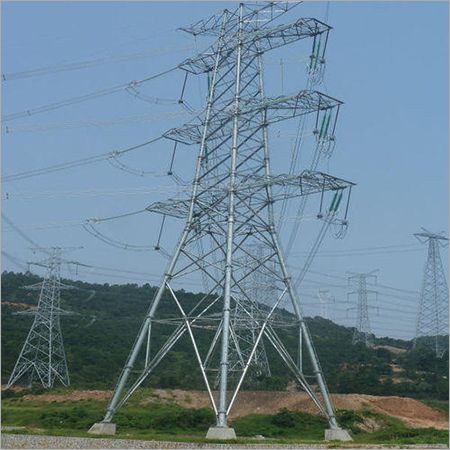
Tell us about your requirement

Price:
Quantity
Select Unit
- 50
- 100
- 200
- 250
- 500
- 1000+
Additional detail
Mobile number
Email

More Products in Transmission Line Towers Category
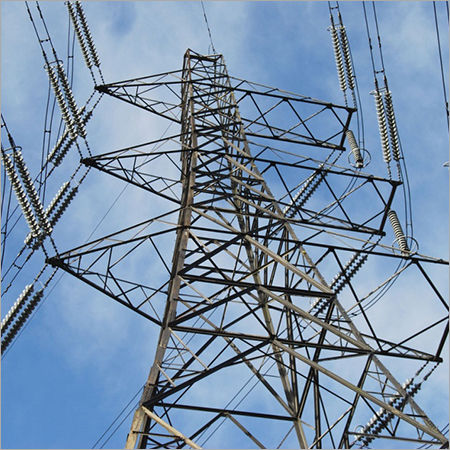
Electrical Transmission Line Tower
Minimum Order Quantity : 10 Metric Tons
Thickness : 3 mm 30 mm
Material : MS
Height : 15 m 80 m
Voltage : 11 kV 765 kV
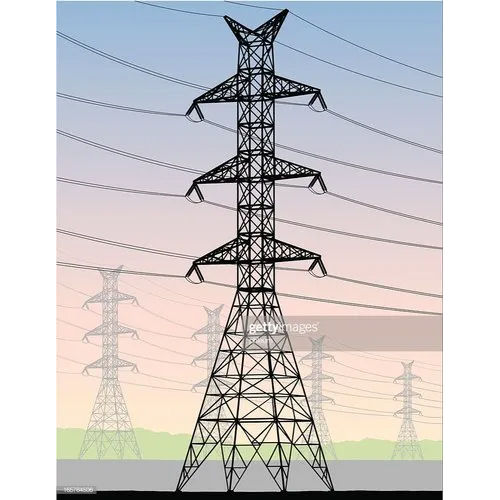
Power Transmission Line Tower
Price 85000 INR / Ton
Minimum Order Quantity : 10 Tons
Thickness : 3 mm to 20 mm
Material : Mild Steel
Height : Up to 100 meters
Voltage : 11 kV to 765 kV
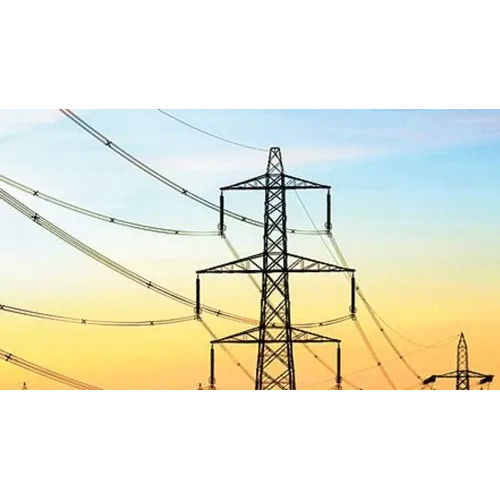
Power Transmission Tower
Price 75000 INR / Metric Ton
Minimum Order Quantity : 10
Thickness : 3 mm to 20 mm
Material : Mild Steel
Height : 15 m to 60 m
Voltage : 33 kV to 765 kV

 Send Inquiry
Our Products

Plot no. 13, Samrat Nagar,Kolhapur - 416419, Maharashtra, India

Mr Sandesh Durge
(Director)
Mobile :08045476504
 Send Inquiry
 Send SMS
Developed and Managed by Infocom Network Private Limited.
